Our Technology

Our technology builds on the proprietary bioiontronics research of Professor Matsuhiko Nishizawa
at Tohoku University’s Graduate School of Engineering.
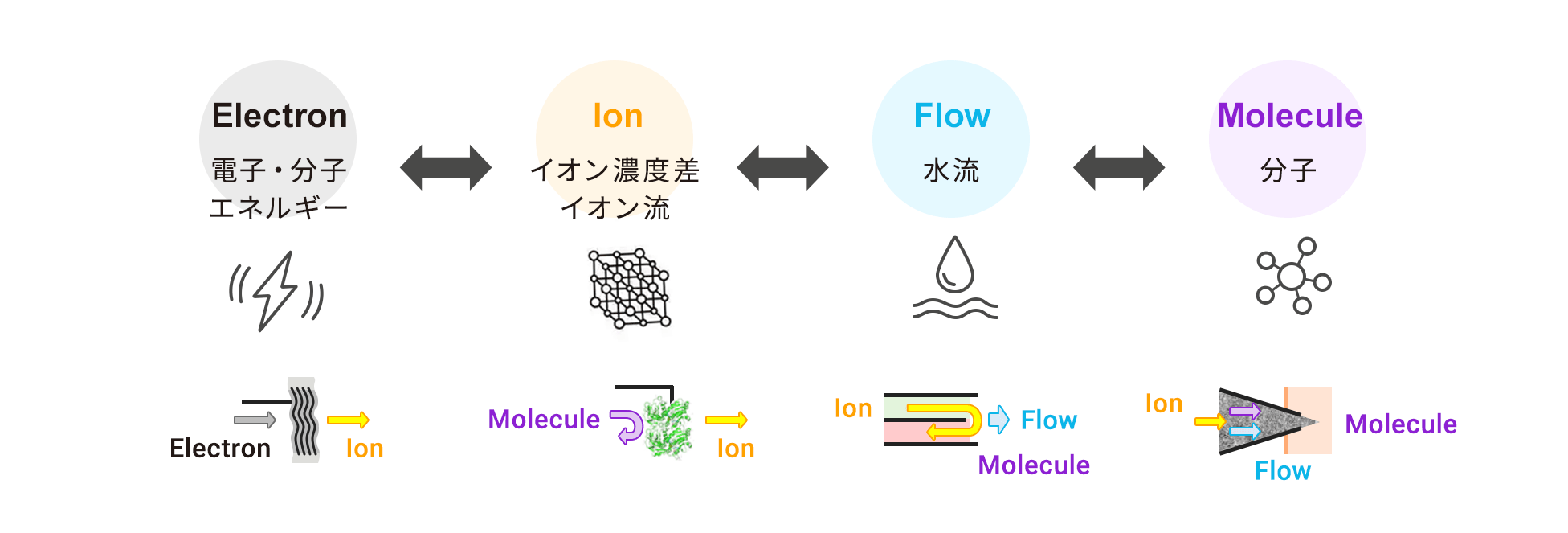
Our iontronics technology controls the conversion of information and energy across multiple domains—electrons, ions, fluid flow, and molecules—to improve compatibility between biological systems and devices at the mechanistic level.
What Is Iontronics?
Bioiontronics is an interdisciplinary field that combines ions with electronics. It integrates the behavior of ions in biological systems with electronic technology to create devices with new capabilities. While conventional electronics controls the flow of electrons, bioiontronics precisely controls and detects the movement and distribution of ions. By applying principles such as electrochemical reactions, ion-selective membranes, and electroosmotic flow, together with highly biocompatible materials, it enables new approaches to challenges that conventional medical technologies have struggled to address. These advances include more efficient transdermal drug delivery, highly sensitive detection of biological signals, and power generation using biologically derived substances—laying the foundation for next-generation medical and healthcare systems.
Ions: Essential to How the Body Works
Water (body fluids) makes up 60% of the human body and contains ions, or electrolytes, that conduct electricity in solution. Like a tiny, invisible universe, these ions are constantly at work inside us.
The moment you wake up in the morning, a delicate exchange of sodium and potassium ions begins inside your brain as they pass through cell membranes. These ions generate electrical signals in nerve cells, sending a command to “wake up” throughout your body. When your muscles receive this signal, calcium ions flow into the muscle cells, causing the muscle fibers to contract and helping you sit up.
When we eat, hydrogen ions released from the cells lining the stomach increase the acidity of gastric juice, which breaks down food. At the same time, small amounts of calcium ions are released from the bones into the bloodstream, where they play a role in invisible biochemical processes such as blood clotting and the regulation of enzyme activity.
Throughout the day, ions work together every time you breathe, your heart beats, or you think. When you sweat during exercise, you lose important electrolytes such as sodium and potassium. Your body responds by making you feel thirsty, encouraging you to replenish fluids and ions.
At night, the ion balance in the brain changes, promoting the secretion of sleep hormones. Even while you are lying down and resting, calcium ions help rebuild bones, and magnesium ions contribute to cell repair and regeneration.
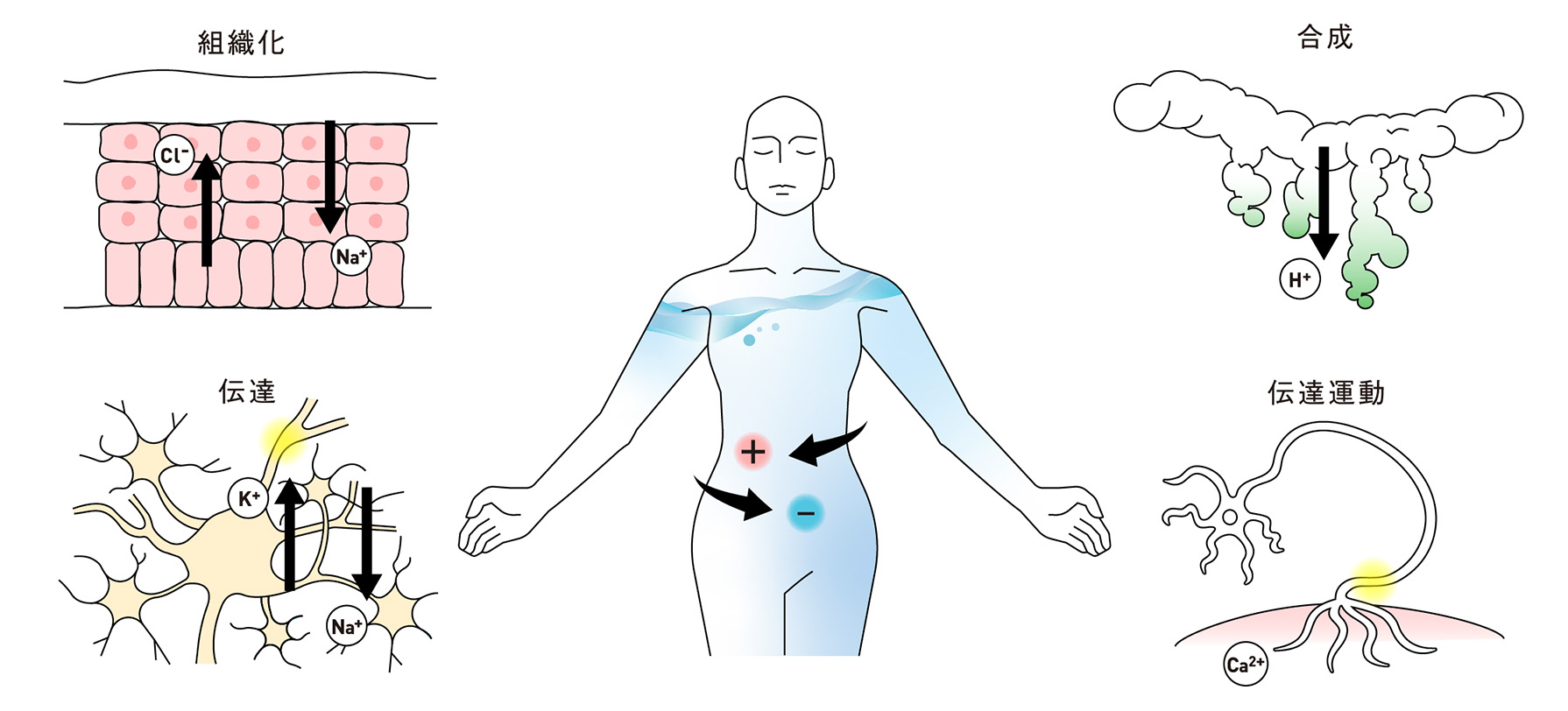
Although invisible, ions are fundamental to our lives. An imbalance in certain ions can cause symptoms such as muscle cramps, fatigue, or an irregular heartbeat. Because electrolyte balance changes with daily diet and physical activity, a balanced diet and adequate hydration are important.
Bioiontronics focuses on this movement of ions and is attracting attention as an innovative field that enables new approaches to medicine and healthcare. Understanding and harnessing the ions constantly moving through our bodies is a key to longer, healthier lives.